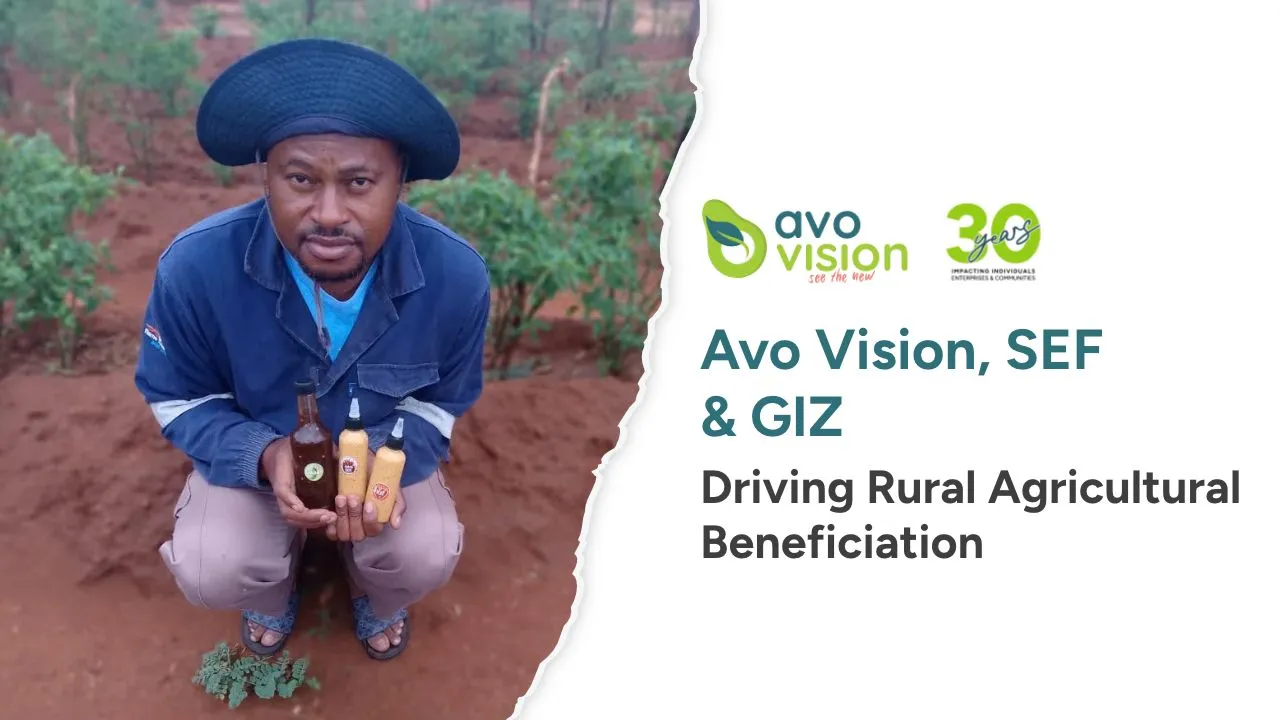
When Tsietsi Muleya left the mining and security sectors and returned home to Ga-Kibi, Limpopo, he carried with him something he had always had: a passion for agriculture. In 2022 he decided to turn that passion into a business. Today he is the owner of Nchadi Holdings (Pty) Ltd, an organic farming enterprise producing okra, chillies, beetroot, onions and tomatoes. Through Avo Vision’s Green Business Value Chain programme, in partnership with the Industrial Development Corporation’s Social Employment Fund (SEF) and GIZ, his journey has moved beyond farming into value addition and more resilient enterprise development.
From Harvest to Enterprise
“What started as a small idea has grown into a registered agribusiness that feeds our community,” Muleya says. Like many small-scale farmers, he faced challenges that went beyond production. Business skills, financial management, market access and structuring the enterprise for growth were areas that needed strengthening.
He joined Avo Vision’s Green Business Value Chain programme, supported by IDC’s SEF and GIZ, in September 2025. The programme provided practical entrepreneurship training, financial literacy and business development support. SEF creates employment opportunities through the Presidential Employment Stimulus, while GIZ’s partnership contributes to strengthening sustainable economic and employment opportunities. Through collaboration with Avo Vision, this support is linked directly to small business development and practical enterprise opportunities.
“The support I received from Avo Vision through GIZ and SEF was a game changer for me.”
Turning a Harvest into a Business Opportunity
Fresh chillies are subject to price fluctuations and competition. Muleya began asking a different question: “How can I make more from what I already have?” He started experimenting with chilli sauce, testing recipes and gathering feedback from family and neighbours. The idea developed into a product of his own.
Today Nchadi Holdings sells fresh chillies, crushed chillies to community members producing atchaar, and its own bottled chilli sauce. The move into value addition has reduced the business’s reliance on selling fresh produce alone.
“Producing the sauce has completely changed the business. Our income is more stable because the sauce has a longer shelf life and can be sold all year-round.”
Creating More Sustainable Income and Local Employment
Nchadi Holdings now employs three people from the local community. Additional community members assist during harvesting and production when needed. These employees support harvesting, cleaning, processing, bottling, packaging and sales. This creates a direct source of income for their households while helping the business maintain regular production and meet customer demand.
This approach sits at the centre of Avo Vision’s Theory of Change: Presidential Employment Stimulus programmes have a greater probability of creating lasting employment when the employment is anchored in small business support. In Nchadi Holdings’ case, the employment opportunity is connected to an operating agricultural enterprise that is being strengthened through business development, financial literacy, value addition and market-oriented growth.
As the business grows, the three employees gain practical experience in farming, food processing, packaging and small-business operations. These skills strengthen the enterprise’s capacity, improve productivity and create a foundation for further employment.
By combining farming with value addition, Nchadi Holdings can generate income throughout the year, make better use of its produce and create more opportunities within the local economy. The business is supporting sustainability in two ways: by developing more reliable income for the enterprise and by creating livelihoods and skills within the community.
Building a Business for the Future
For Muleya, sustainability means developing a business that can continue creating value beyond a single harvest or intervention. The support from Avo Vision, IDC’s SEF and GIZ has helped him strengthen the foundations of Nchadi Holdings through improved business practices, financial literacy, record keeping and planning. These capabilities are important as the business expands its product range, reaches new markets and creates more employment.
“It has given me the confidence and the practical means to think bigger, beyond just surviving, to build a business that creates jobs and supplies the market consistently.”
His ambition is to grow Nchadi Holdings into a recognised agro-processing brand supplying retail shops beyond Limpopo. His immediate focus is securing more land to increase production and operate more efficiently throughout the year.
From Individual Enterprise to Wider Impact
Nchadi Holdings reflects what can happen when enterprise support is connected to practical opportunities in agriculture and local markets. Through the collaboration between Avo Vision, SEF and GIZ, businesses receive support to improve their operations, add value to their products, strengthen their income and create livelihoods, while providing subsidised labour that remains employed at the conclusion of the programme.
A farmer who once focused mainly on producing fresh crops is now beneficiating those crops, developing branded products, reaching new customers and employing three people from his community. His business is creating value at several stages — from production and processing to packaging and sales — while supporting a communal livelihood.
“It is one thing to grow a chilli, but it is something else to see your own label on a bottle, made by your own hands from seed to final product.”
Nchadi Holdings is still growing, but it is no longer focused only on increasing production. It is building a more resilient business with diversified income, stronger skills, added value and the potential to create further employment. The three employees are part of that sustainability story. Their work helps the business operate more consistently, while the income and experience they gain extend the benefits of the enterprise into the wider community.
For Avo Vision, SEF and GIZ, the partnership demonstrates how coordinated support can help small enterprises move from survival towards sustainability. For Muleya, it has provided the confidence and tools to build a business that can continue creating value, supporting employees and contributing to the local economy for years to come.
Organisations interested in supporting rural agricultural beneficiation, value-addition enterprises or employment-linked small business development can explore partnership opportunities with Avo Vision. Get in touch to discuss how tailored programmes can create shared value in rural communities.
Frequently Asked Questions
What is agricultural beneficiation in the context of rural enterprises?
Agricultural beneficiation means adding value to raw produce through processing, packaging or product development so that farmers and small enterprises can earn more stable income beyond selling fresh crops alone.
How does Avo Vision’s Green Business Value Chain support farmers like Tsietsi Muleya?
The programme provides practical entrepreneurship training, financial literacy, business development support and linkages to partners such as the Social Employment Fund and GIZ, helping farmers strengthen operations, add value to products and create local employment.
What role does the Social Employment Fund (SEF) play?
SEF, under the Presidential Employment Stimulus and implemented with partners including Avo Vision, creates employment opportunities while anchoring those jobs in small businesses that receive ongoing enterprise support, increasing the chance of lasting livelihoods.
Why is value addition important for small-scale farmers in South Africa?
Fresh produce is often subject to price fluctuations, short shelf life and limited market access. Value addition through processing and product development can stabilise income, extend market reach and create additional jobs in rural communities.
What products does Nchadi Holdings produce?
Nchadi Holdings grows organic okra, chillies, beetroot, onions and tomatoes. It also sells crushed chillies and has developed its own bottled chilli sauce, moving the business into agro-processing.
How many people does Nchadi Holdings currently employ?
The business employs three people from the local community on a regular basis, with additional community members assisting during harvesting and production peaks.
What is Avo Vision’s Theory of Change regarding employment programmes?
Avo Vision’s Theory of Change holds that Presidential Employment Stimulus programmes have a greater probability of creating lasting employment when the jobs created are anchored in small businesses that also receive enterprise development, financial literacy and market support.
Where is Ga-Kibi and why is it significant for this work?
Ga-Kibi is a rural area in Limpopo’s Blouberg Municipality. It is one of the communities where Avo Vision’s Green Business Value Chain and Agri Regen activities support regenerative agriculture, enterprise development and local value addition.
How does GIZ contribute to these partnerships?
GIZ partners with Avo Vision and other stakeholders to strengthen sustainable economic and employment opportunities, linking skills development and enterprise support to practical rural development outcomes.
How can organisations partner with Avo Vision on agricultural value-addition or rural enterprise programmes?
Organisations can contact Avo Vision to explore customised partnership models that combine business development support, employment creation and value-addition interventions tailored to rural agricultural communities.