
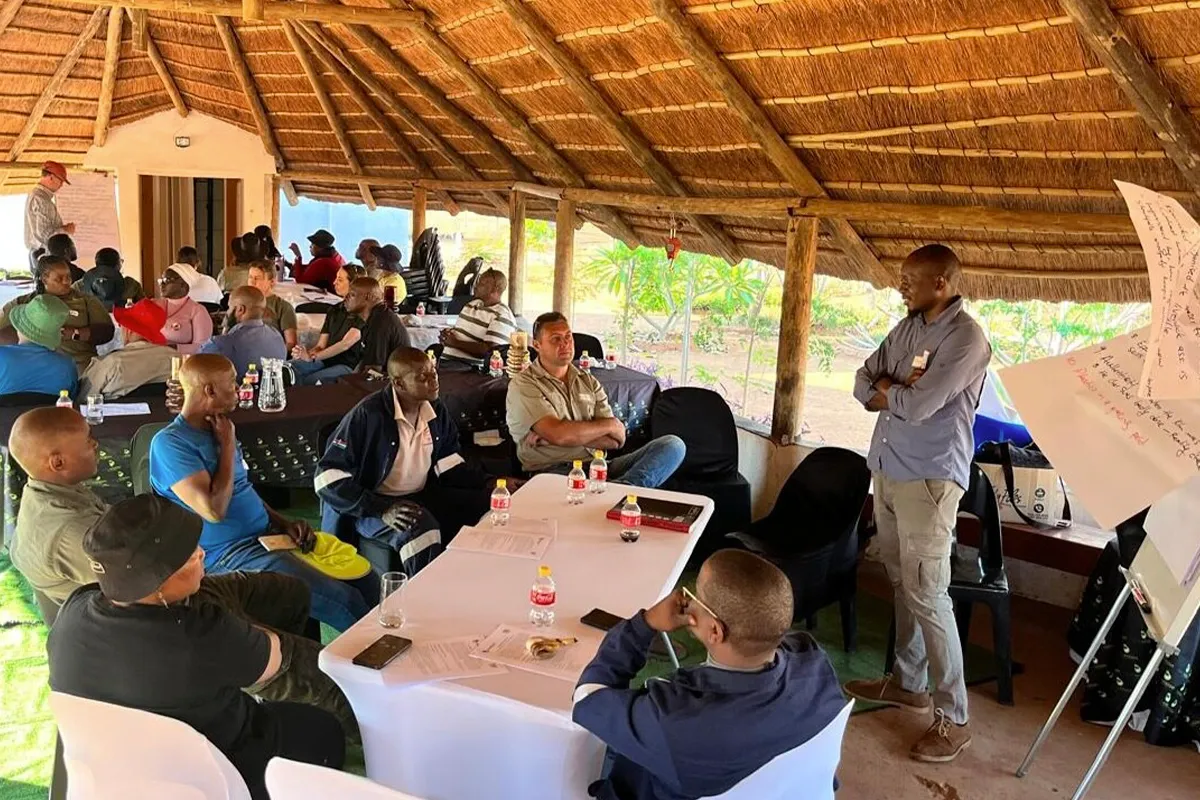
In July 2026 Avo Vision hosted the National Business Initiative (NBI), the implementer of Investing in Young Businesses in Africa (IYBA) initiative funded by GIZ, to learn how the biomass ecosystem is able to unlock economic opportunities for rural communities. Avo Vision showcased the work it is enabling in land restoration, biomass beneficiation into value-added products and the sustaining of restoration impact through regenerative agriculture – crop farming and livestock husbandry. These enterprises have been established through the support of De Beers Venetia Mine, GIZ, IDC SEF and Avo Vision. The tour comprised representatives from NBI, various corporates, incubators, researchers and entrepreneurs.
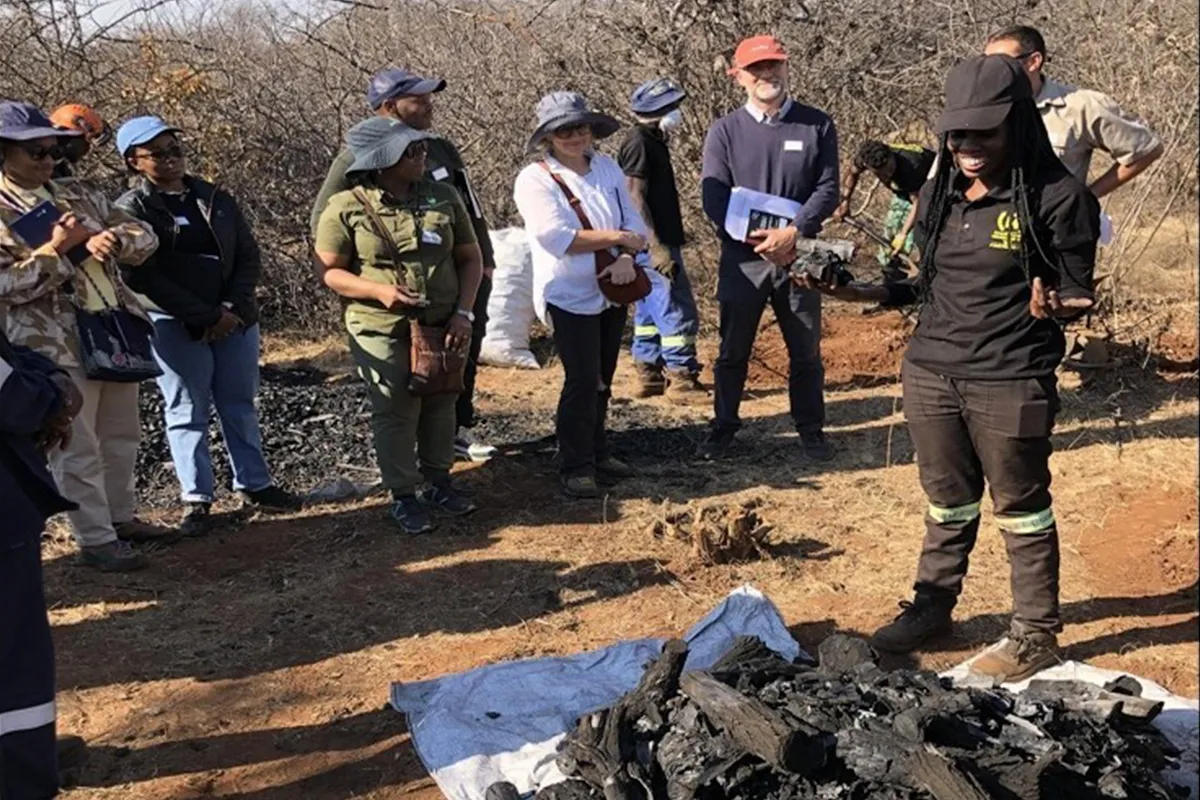
The biomass economy in South Africa contributes roughly 6% to 8% of the country's Total Primary Energy Supply (TPES) and about 3.5% of its final energy consumption (IEA Bioenergy). The economy is heavily bifurcated between a massive informal rural woodfuel sector and highly localized industrial self-generation. The ten to twenty million estimated hectares infested by Alien and/or Invasive Plant species nationally present an opportunity to leverage these plants towards the creation of green alternatives for various products, including biochar, charcoal, wood vinegar, cosmetic products and others, while also transitioning the encroached areas into productive land.
A catalyst for local economies: The Learning Tour demonstrated that biodiversity restoration should not be viewed solely as an environmental intervention, but as a catalyst for inclusive economic development. Restoration creates an opportunity to regenerate ecosystems while simultaneously building sustainable rural economies.
Commercial models drive sustainability: The tour highlighted the importance of learning directly from the biomass sector and other ecosystem-based enterprises that have successfully linked conservation with commercial opportunity. It reinforced that rural development is most effective when environmental restoration is supported by viable business models that enable communities to become economically self-sufficient rather than permanently dependent on grant funding.
Ultimately, restoration succeeds when it creates livelihoods, strengthens local enterprises and restores dignity alongside ecosystems.
Several important themes emerged during the learning journey:
- Restoration can generate sustainable income when biomass and other natural resources are responsibly beneficiated.
- Commercial activities should underpin restoration programmes, ensuring enterprises become financially independent over time.
- Rural enterprises can transition communities from poverty alleviation and subsistence activities towards competitive local businesses.
- Regenerative agriculture, biomass beneficiation and communal livestock management can be integrated into a single landscape restoration economy – this is vital for sustained landscape restoration and broad-based economic benefits.
- Successful ecosystem restoration requires collaboration between environmental organisations, businesses, government and communities.
The tour reinforced several practical lessons for implementing successful rural development programmes.
- Learn from practice, not theory alone.
True understanding comes from spending time with communities and enterprises on the ground. Case studies provide context, but lived experience reveals the realities behind successful restoration and implementation. - Put people before projects.
Economic development begins with understanding community priorities, aspirations and challenges. Solutions should be designed with communities rather than for them. - Build authentic collaboration.
Partnerships must be intentional and outcome-driven. Different organisations bring different strengths, but alignment around shared outcomes creates greater impact. - Translate environmental language into community language.
Technical terminology should never become a barrier. Conversations should focus on issues that matter to rural people—livelihoods, livestock, farming, income and opportunity. A similar case can be made for various sectors key to enabling the biomass economy. - Ask questions before offering solutions.
Communities are best positioned to shape solutions to their own challenges, relying on indigenous knowledge and lived realities. Listening builds ownership, trust and more sustainable outcomes that are aligned to realities.
Key Reflections
The learning tour reinforced that:
- Restoration is fundamentally about people as much as nature.
- Commercial sustainability is essential for long-term conservation success.
- Rural enterprises are powerful vehicles for economic transformation.
- Genuine collaboration is built through trust, humility and shared purpose.
- Learning happens most effectively in the field, alongside practitioners and communities.
The greatest lesson was that lasting environmental impact is achieved when restoration creates thriving ecosystems, resilient enterprises and prosperous rural communities simultaneously.