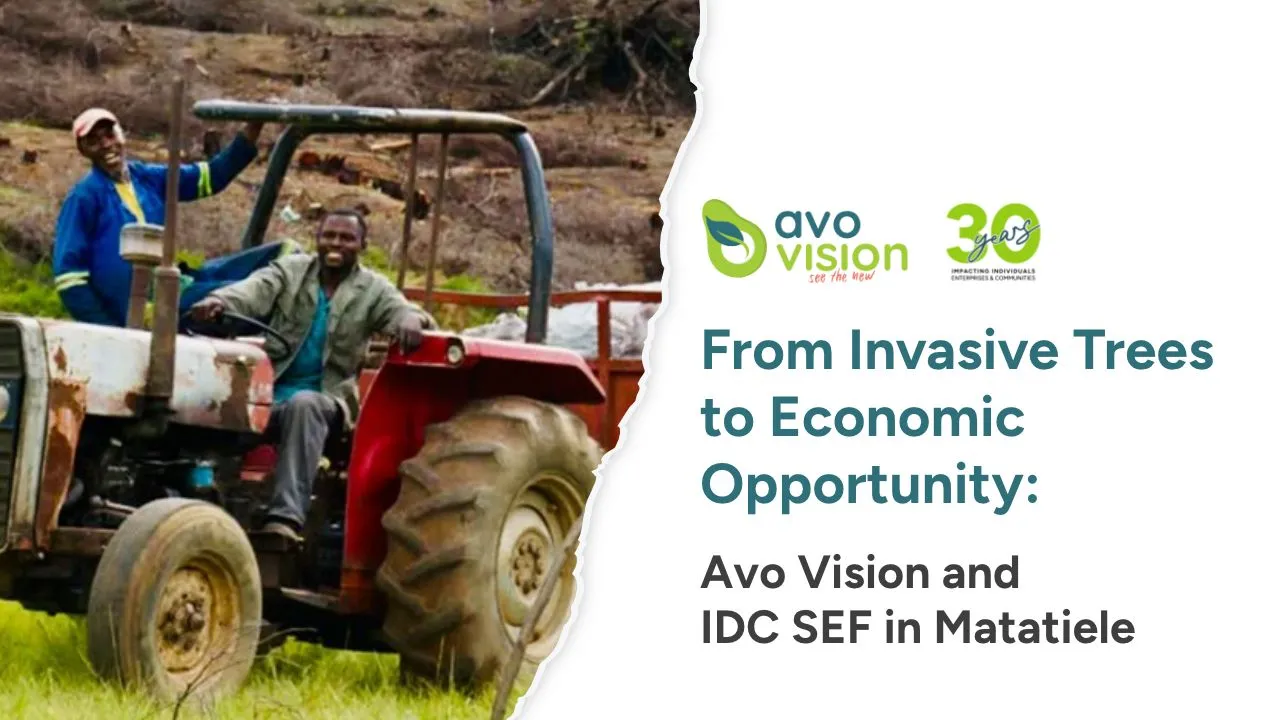
In Matatiele, invasive vegetation presented an environmental challenge, while local producers faced the difficult task of turning their work into sustainable businesses. Through Avo Vision’s Green Business Value Chain programme, implemented in partnership with the Industrial Development Corporation’s Social Employment Fund, these challenges are being addressed together. At Bhukwana Timbers, Bonakele Landingwe has built an enterprise that creates employment, gives harvested vegetation commercial value and is helping local charcoal producers reach bigger markets.
Invasive trees do not simply take up space. As they spread, they compete with indigenous vegetation, consume valuable water resources and place pressure on the natural balance of the land. Removing them is essential to restoration, but clearing the land raises another question: what happens to the vegetation once it has been removed?
At the same time, rural communities face a different but closely connected challenge. People can have the skills and willingness to work, and local producers can have a product to sell, but without established markets, productive equipment, transport and the capacity to meet customer demand, turning that work into a viable business is difficult.
This is the gap that Avo Vision’s Green Business Value Chain (GBVC) programme, implemented in partnership with the Industrial Development Corporation’s Social Employment Fund (SEF), seeks to address. By connecting environmental restoration with enterprise development, the programme creates opportunities to put harvested invasive vegetation to productive use while building businesses and employment around the value chain.
In Matatiele, Eastern Cape, that approach is taking shape through Bhukwana Timbers, established by Bonakele Landingwe on 15 October 2025. The business produces charcoal from suitable harvested invasive woody vegetation and currently employs 14 people.
For Bonakele, the opportunity was not simply to produce another product. It was to build an enterprise around a resource that needed to be removed, create work in the community and establish a business with the potential to trade beyond the period of programme support.
He leads the business, while his wife, Nosibongile Landingwe, manages its administrative operations. Her role is an important part of the day-to-day running of the enterprise, helping ensure that the work behind the production process is also taken care of.
Bonakele on the opportunity he saw:
“I saw an opportunity to build something from a challenge that was already affecting the land around us. The trees needed to be removed, but I also started thinking about what could happen to that material afterwards. If it could be used to produce charcoal, it could create work and give us something we could take to market. I wanted to build a business that could grow, create opportunities for other people and become something we could sustain through our own trading.”
A business that is also building a future for the family
Behind Bhukwana Timbers is a family with a shared interest in seeing the business succeed. While Bonakele leads the enterprise and its operations, Nosibongile takes responsibility for the administrative side. It is work that may happen away from the kilns and production site, but it is essential to keeping a business organised and moving forward.
For Nosibongile, the business represents more than an additional responsibility. It is part of a longer-term effort to build financial stability for their household and create something their family can grow with. The income generated through the enterprise, as well as the possibility of expanding its operations, can contribute to household needs and future plans.
Nosibongile on her role and what the business means to her family:
“Being involved in the business has given me a different appreciation of what it takes to build something of your own. My role is on the administrative side, making sure that the work behind the scenes is taken care of. It may not always be visible, but it matters because a business needs to be organised if it is going to grow.
“For our family, this business represents an opportunity to build towards something more secure. Like any household, we have responsibilities and things we need to provide for. Knowing that we are working towards growing an enterprise that can contribute to our family’s future gives the work a deeper meaning. We want to see it become a stable business, one that can support our household and continue creating opportunities for other people too.”
Turning environmental work into economic activity
The removal of invasive alien vegetation is an important part of restoring affected landscapes. Certain invasive species spread aggressively, compete with indigenous plants and use water that would otherwise support natural ecosystems and communities. Clearing them can help improve conditions for indigenous vegetation to recover and support broader restoration efforts.
But the value chain does not have to end when the trees are removed.
Through the GBVC programme, suitable harvested woody material can be used as a resource for charcoal production. This creates a commercial link between land restoration and local enterprise. Instead of treating the cleared material as waste, it becomes an input into a product that can be processed, packaged and sold.
That connection matters because environmental restoration also requires people, businesses and economic activity to sustain the work. Harvesting, preparing timber, operating kilns, processing charcoal and getting finished products to buyers all create opportunities for participation in the value chain.
The partnership therefore brings two priorities into the same conversation: restoring the environment and creating economic opportunities for the people who live and work in these communities.
For Bhukwana Timbers, this means building a business around the productive use of harvested invasive vegetation, while contributing to a wider effort to make restoration work economically meaningful.
Fourteen jobs, and the livelihoods behind them
At Bhukwana Timbers, 14 people contribute to the different stages of charcoal production. Their responsibilities include harvesting and preparing invasive trees, including the work of trained chainsaw operators, handling and preparing timber, managing kiln operations, processing and sorting charcoal, bagging and packaging finished products, and preparing orders for distribution.
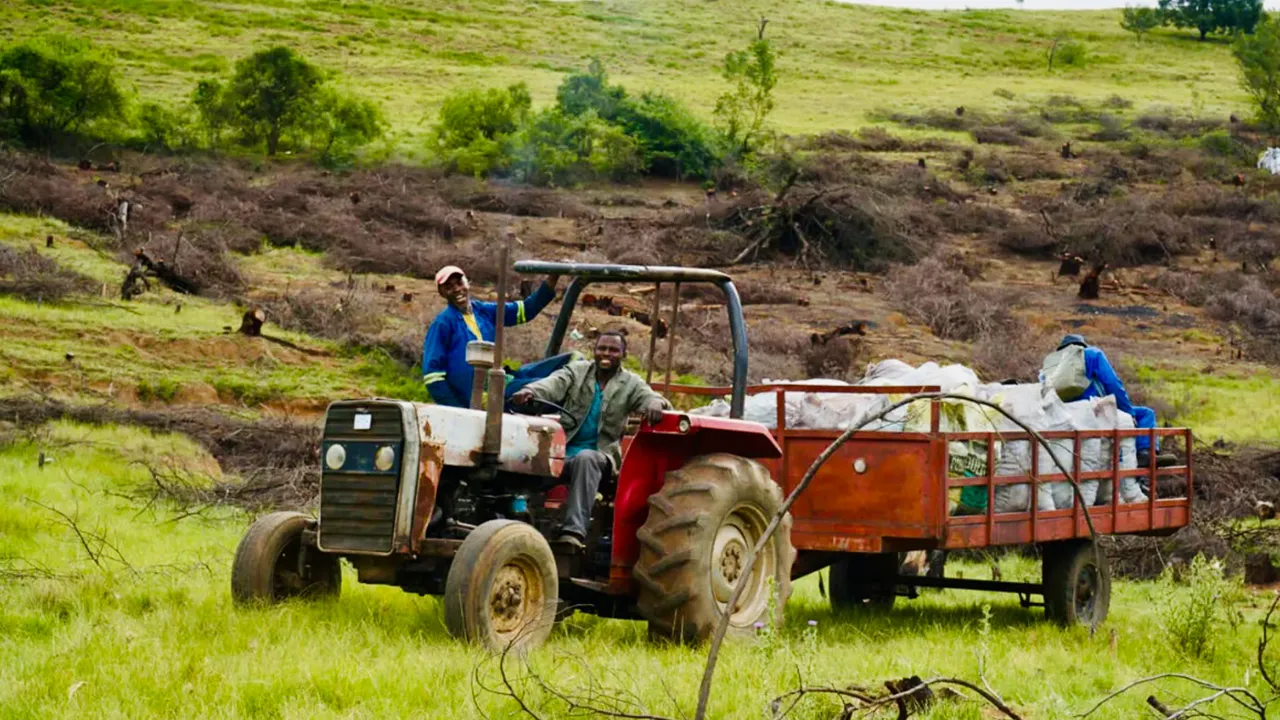
These are practical roles that keep the business moving. Each stage requires people, coordination and an understanding of the production process.
But the significance of those jobs is not measured only by the number of people employed. For workers, an income can mean being able to contribute to groceries, transport, school expenses, electricity and other household responsibilities. The value of employment reaches beyond the workplace into the lives of the people who depend on it.
The challenge is making sure these opportunities can last. A business that depends entirely on temporary employment support cannot guarantee continued work once that support ends. It needs to build a customer base, generate income, manage costs and maintain enough production to keep trading.
That is why enterprise development is such an important part of the partnership. The aim is not only to create work while environmental activities are under way, but to strengthen the businesses involved so that they have a better chance of continuing to employ people and contribute to their local economies.
Bonakele on what employment means:
“For me, having 14 people working in the business comes with a responsibility. Every person has a home and responsibilities outside this workplace. When someone earns an income here, that income can help them take care of their family and meet everyday needs. I do not want the work to be something that only lasts for a short period. I want to grow the business to a point where we can continue providing opportunities because the business itself is doing well.”
From individual producers to a stronger market
Even when producers can make a product, finding a market for it is not always straightforward. Larger buyers often require volumes that one small enterprise may struggle to supply. Transport costs, limited production capacity and inconsistent stock can make it difficult for rural businesses to compete for larger orders.
Bonakele recognised that this was not a challenge Bhukwana Timbers could solve on its own. There were other local charcoal producers facing similar barriers, and working separately limited what they could collectively offer buyers.
Bhukwana Timbers initially helped lead a bulk-selling model that brought producers together to combine their charcoal supplies and pursue larger orders. By pooling available stock, producers could approach the market with greater volumes instead of each trying to meet larger customer requirements individually.
The model has since been replicated in Moiketsi and Mvenyane villages.
This is an important development because its benefits extend beyond one business. It creates a way for smaller producers to collaborate, strengthen their market presence and pursue commercial opportunities that may otherwise be out of reach. It also shows how one enterprise’s progress can create possibilities for others.
Market access is central to sustainability. Producers need more than the ability to make charcoal; they need buyers, reliable supply arrangements and a practical way to get their products to market. By encouraging collaboration, the bulk-selling model helps address one of the barriers that can prevent small producers from growing.
The value of this approach lies in what it can make possible over time: stronger relationships between producers, greater collective capacity and a more organised route to market.
An investment that moves the business forward
For Bhukwana Timbers, getting charcoal to buyers has been another important part of building a sustainable operation.
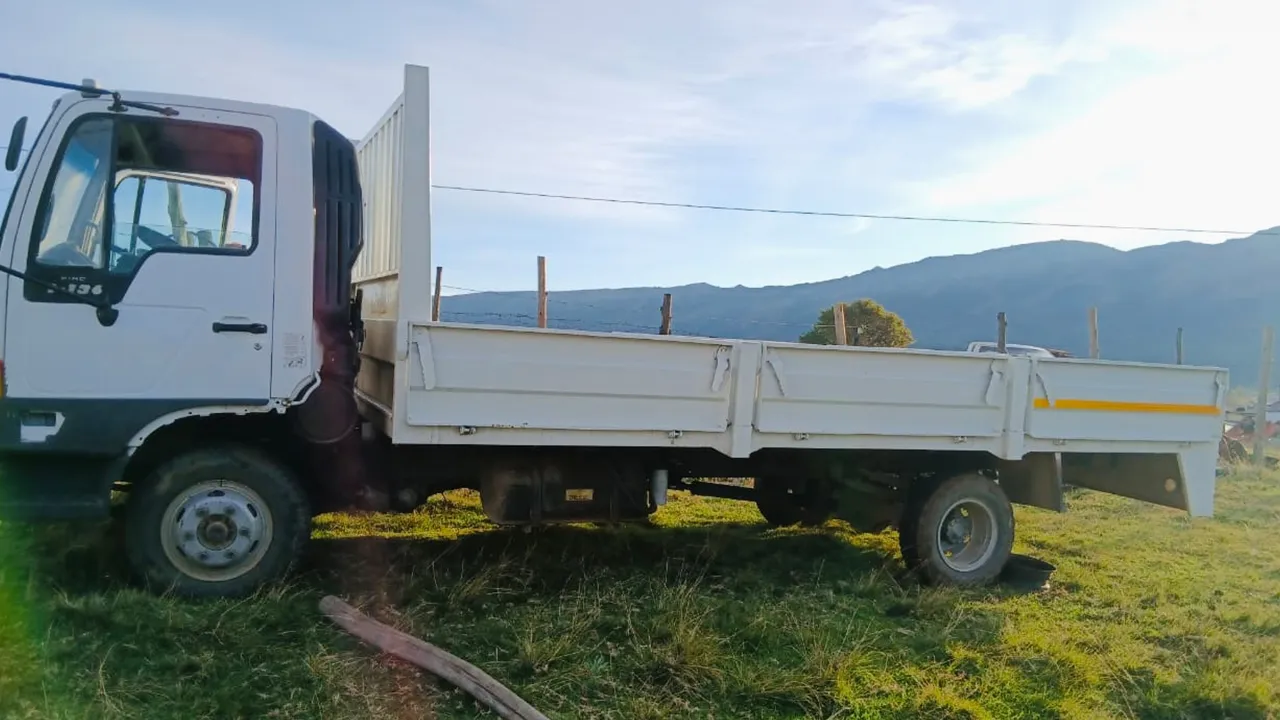
Bonakele sold one of his tractors and used the proceeds, together with the cash-flow relief provided through the SEF wage subsidy, to purchase a second-hand eight-tonne long-base truck.
This was a significant investment in the business. Having its own vehicle reduces reliance on hired transport and gives the enterprise greater control over deliveries. It is also a productive asset that can support the business as its customer base and order volumes grow.
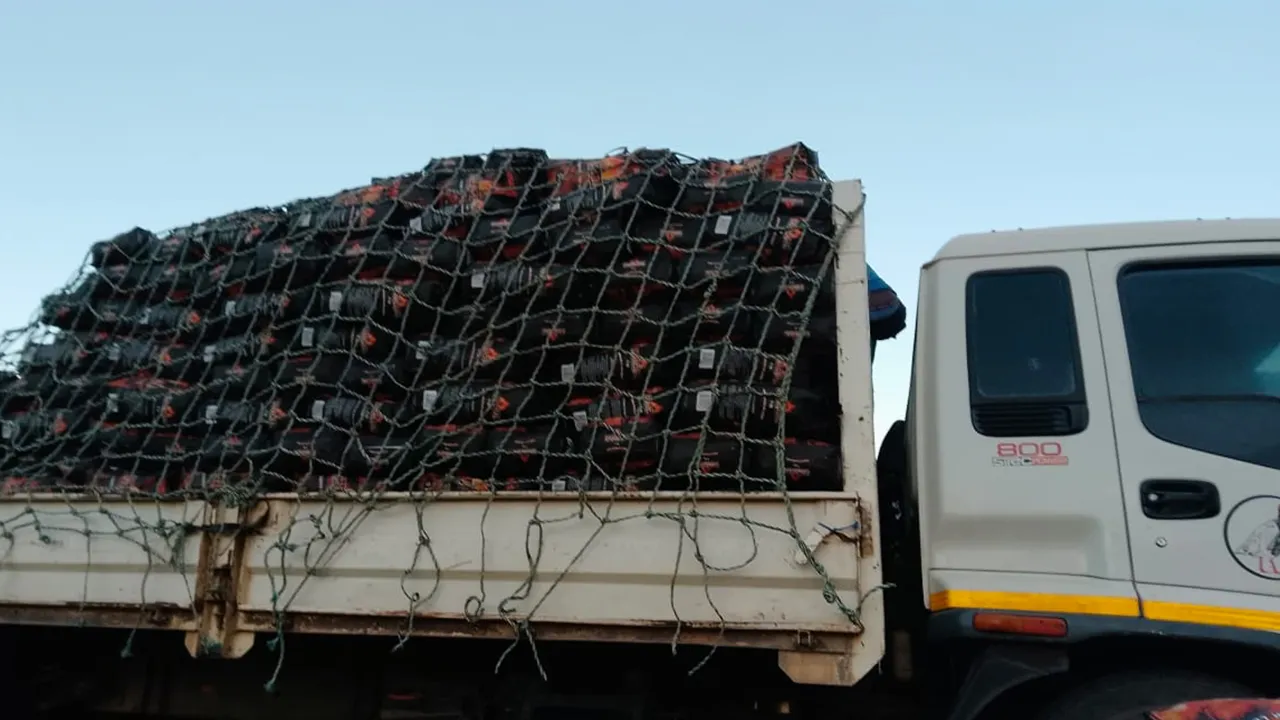
The investment has positioned Bhukwana Timbers to pursue a confirmed buyer requiring approximately 1,500 bags of charcoal per week. That demand represents an important commercial opportunity, although meeting it consistently will depend on the business increasing its production capacity.
There are still practical obstacles to overcome. Equipment breakdowns, fuel constraints and insufficient drying time have affected production, with kiln utilisation averaging around 25%. Additional storage infrastructure is now a priority as the business works towards increasing output and preparing stock more consistently.
These challenges are a reminder that securing a buyer is only one part of building a viable enterprise. The business must also be able to produce enough stock, maintain quality, manage its operating costs and deliver on time.
The truck is a meaningful step in that direction. It shows how the business is beginning to invest in its own capacity rather than relying solely on external support. The next stage is to strengthen the production and storage systems needed to make the most of the market opportunity.
Bonakele on investing in the future:
“Selling my tractor was not an easy decision, but I had to look at what the business needed most at that stage. Transport was limiting our ability to move our product, so I decided to put that money towards a truck. The SEF wage subsidy also helped ease the pressure on our cash flow and made that investment possible. We now have an asset that belongs to the business and can help us reach buyers. The next step is to improve our production and storage so that when the orders come, we are in a position to supply them consistently.”
What the partnership makes possible beyond the programme
The experience of Bhukwana Timbers illustrates why the relationship between employment support and enterprise development matters.
Through Avo Vision’s partnership with the IDC’s SEF, participating enterprises receive support that helps meet employment costs while environmental and related work is carried out. This creates room for businesses to undertake work, involve local people and develop their operations.
However, the longer-term value depends on what happens beyond that initial support. Businesses need to turn the opportunities created during the programme into the ability to trade, generate revenue, acquire productive assets and maintain employment.
At Bhukwana Timbers, that progression can be seen in the steps Bonakele has taken: establishing the enterprise, employing 14 people, helping organise local producers around bulk selling and investing in an eight-tonne truck. These are not simply programme activities. They are business decisions that can strengthen the enterprise’s ability to operate independently.
The collective results also point to the commercial potential of this approach. Across participating green enterprises, the programme recorded approximately R3 million in revenue. This is a programme-wide figure, not revenue attributed to Bhukwana Timbers alone. It demonstrates that environmental work can be connected to productive economic activity and that the value created can extend into local businesses and markets.
There is still work to be done. Bhukwana Timbers needs to improve kiln utilisation, address equipment and fuel constraints, expand storage and build the production consistency required to meet larger orders. But the business is no longer looking only at the work of producing charcoal. It is building the assets, relationships and market access needed to become a more capable commercial operation.
This is what sustainability needs to look like in practice. Support creates an opportunity, but businesses need the capacity to carry it forward. That means access to customers, sound operations, the ability to reinvest and a model that can continue generating income and work.
For organisations seeking to connect socio-economic development with practical commercial outcomes, the partnership demonstrates how environmental restoration can become part of a wider enterprise development approach. It is an opportunity to create value for the land while building the capacity of local businesses and producers.
A future built beyond the initial opportunity
Bhukwana Timbers is still a growing enterprise, and its next stage will depend on how successfully it addresses the production challenges ahead. Yet its progress already shows what can happen when an environmental challenge is approached as an opportunity to build local economic activity.
Fourteen people are working across the charcoal production process. A trained chainsaw operator is part of the work required to harvest and prepare the vegetation. Producers in other villages have adopted a collaborative selling model. The business has invested in its own transport, and a larger buyer requirement gives it a commercial opportunity to work towards.
Beyond the charcoal itself, these developments have the potential to strengthen household incomes, widen market access for small producers and build a rural enterprise with greater control over its future.
Organisations interested in connecting environmental restoration with enterprise development and sustainable rural livelihoods can contact Avo Vision to explore partnership opportunities.
Frequently Asked Questions
What is Avo Vision’s Green Business Value Chain programme?
The Green Business Value Chain (GBVC) programme connects environmental restoration with enterprise development. It creates opportunities to put harvested invasive vegetation to productive use while building businesses and employment around the value chain, implemented in partnership with the Industrial Development Corporation’s Social Employment Fund.
Who founded Bhukwana Timbers and when?
Bhukwana Timbers was established by Bonakele Landingwe on 15 October 2025 in Matatiele, Eastern Cape. The business produces charcoal from suitable harvested invasive woody vegetation.
How many people does Bhukwana Timbers currently employ?
The business currently employs 14 people who contribute to harvesting and preparing invasive trees, kiln operations, processing and sorting charcoal, bagging, packaging and preparing orders for distribution.
What role does Nosibongile Landingwe play in the business?
Nosibongile Landingwe manages the administrative operations of Bhukwana Timbers, ensuring the work behind the production process is organised and the business can move forward.
How does the programme turn invasive vegetation into economic activity?
Suitable harvested woody material from invasive alien vegetation is used as a resource for charcoal production. This creates a commercial link between land restoration and local enterprise instead of treating the cleared material as waste.
What is the bulk-selling model introduced by Bhukwana Timbers?
Bhukwana Timbers helped lead a bulk-selling model that brings local charcoal producers together to combine their supplies and pursue larger orders. The model has been replicated in Moiketsi and Mvenyane villages.
What investment has Bhukwana Timbers made in transport?
Bonakele sold one of his tractors and used the proceeds, together with cash-flow relief from the SEF wage subsidy, to purchase a second-hand eight-tonne long-base truck. This reduces reliance on hired transport and supports deliveries to larger buyers.
What commercial opportunity is Bhukwana Timbers pursuing?
The business is positioned to pursue a confirmed buyer requiring approximately 1,500 bags of charcoal per week. Meeting this demand consistently depends on increasing production capacity, kiln utilisation and storage.
What revenue has the broader green enterprise programme recorded?
Across participating green enterprises, the programme recorded approximately R3 million in revenue. This is a programme-wide figure and is not attributed to Bhukwana Timbers alone.
How can organisations partner with Avo Vision on similar programmes?
Organisations seeking to connect socio-economic development with practical commercial outcomes, environmental restoration and rural enterprise development can contact Avo Vision to explore partnership opportunities.