

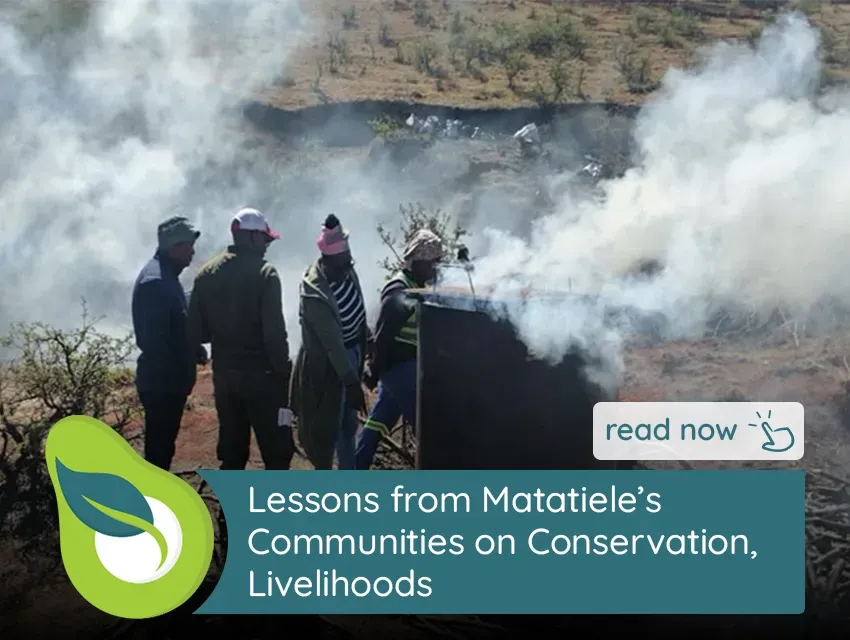
Avo Vision and Sentebale, operating as the Sentebale–Avo Vision Joint Venture (SAJV), embarked on a five-day learning tour in Matatiele, Eastern Cape, that could influence the future of land restoration and livelihoods in Lesotho. But this was more than a study trip. It was an opportunity to witness how South African communities, enterprises, and organisations are pioneering models that weave ecological restoration with economic opportunity.
The tour formed part of the Conservation Agreement (CA) Promotion Grant, funded by the International Fund for Agricultural Development (IFAD) under its eight-year Regeneration of Landscapes and Livelihoods (ROLL) project. The grant aims to create a robust policy framework, an operational manual, and a community pilot, the building blocks for rolling out conservation agreements across Lesotho.
Reimagining Herding and Rangelands
On 19 August, the SAJV team engaged with Meat Naturally, an organisation widely recognised for innovative livestock and rangeland management. Their model rests on three interlinked pillars:
- Rangeland Stewardship Agreements, formal contracts that anchor community responsibility for sustainable grazing, drawing legitimacy from traditional governance structures.
- Herding for Health – an approach where trained Eco-Rangers blend traditional herding with ecological monitoring, rotating herds to regenerate soil, restore biodiversity and replenish water systems.
- Carbon Credits – communities generate income by sequestering carbon through improved land management and selling these credits on carbon markets.
These principles came alive in Colana Village, the first in Matatiele to sign a stewardship agreement in 2014. Their “smart grazing” journey, supported by Meat Naturally and Fleece Naturally, was inspired by restoration champion Bongiwe Mafunya.
Avo Vision’s Environmental Project Manager, Esther Mphingalale, reflected:
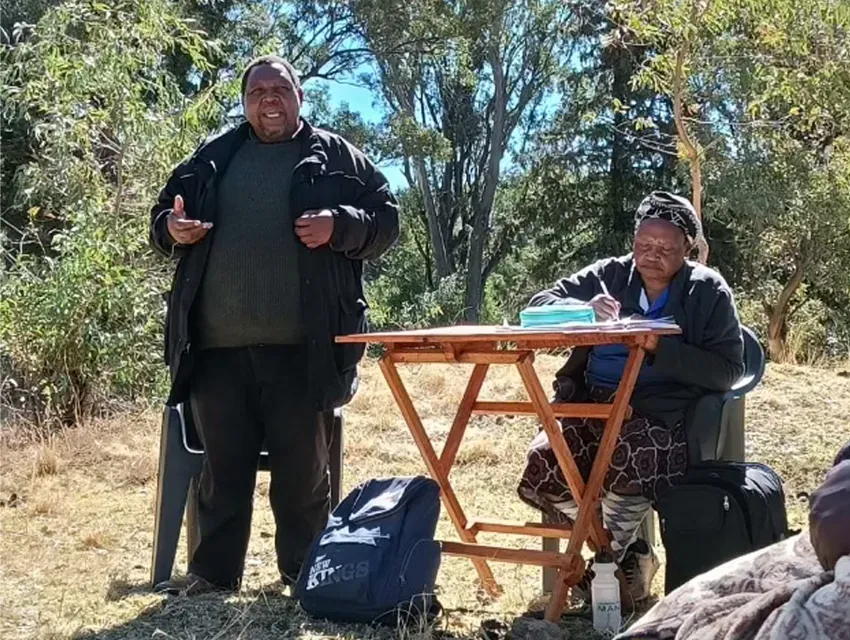
“What stood out in Colana Village was their compliance with the Rangeland Stewardship Agreement and their use of the Herding for Health model. They were welcoming and eager to share their journey,” said Mphingalale.
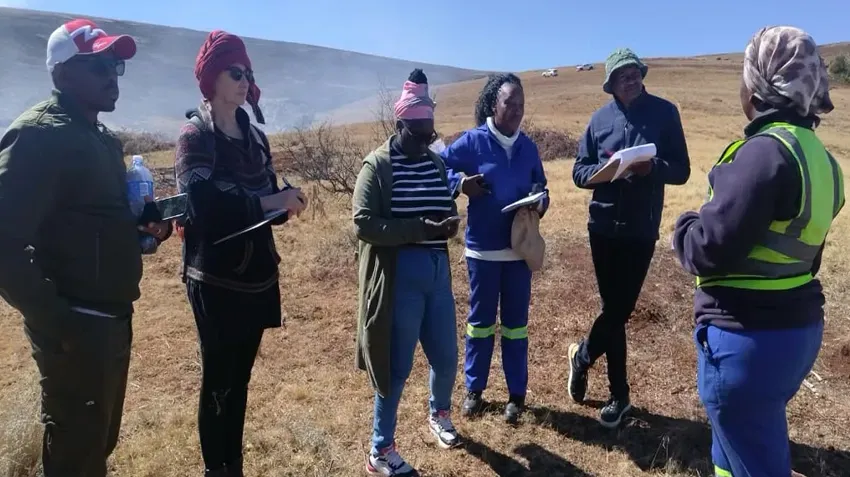
Among Colana village’s Eco-Rangers was Maria Jozela, a young female herder whose rotational grazing practices have visibly restored the land. In a rested camp, ungrazed since May 2025 and scheduled to reopen in October 2025, lush regrowth testified to the power of managed grazing. Community members also highlighted the economic impact of livestock auctions, introduced in 2016. What began with just 50 cows grew to 180 sold in the very first auction, proof that ecological and economic gains can go hand in hand.
Charcoal with a Difference
The team also visited a charcoal site run by entrepreneur Mpho Motobodi since 2023. Her enterprise has demonstrated how charcoal production can simultaneously restore ecosystems and generate income. Six kilns were in operation during the visit, with biomass collection and processing in full swing. Beyond efficiency, the site revealed an equally important story: grasslands regenerating and streams flowing again where degradation once dominated. Avo Vision as one of the strategic implementing partners of the Social Employment Fund (SEF) under Avo Vision's Green Business Value Chain (GBVC) provided a lifeline for Mpho’s charcoal business.
Mpho explained the critical role of support in her journey:
“The Social Employment Fund (SEF) supported me with working tools and capital, including stipends for my employees for 20 months.”
The village Chief Moshoeshoe of Masuphe, praised the initiative for its ecological and social benefits:
“Now we enjoy renewed access to water, a direct result of the environmental regeneration driven by Avo Vision and Mpho’s charcoal initiative.”
He also expressed pride that Mpho’s sister is preparing to launch her own charcoal business. For him, this represents a return to traditional land stewardship, where communities reclaim ecological heritage while building sustainable livelihoods.
Tackling Restoration and Hygiene
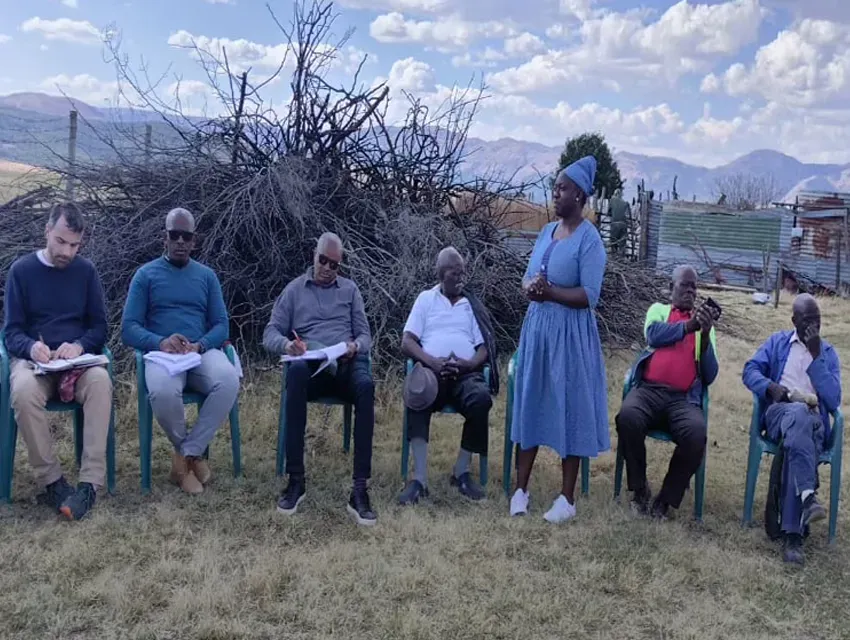
The team also met with Environmental and Rural Solutions (ERS) representatives. ERS complements rangeland and livestock programmes with crop farming, community auctions, and incentive systems that reward ecological responsibility. Farmers who neglect rangeland care, face higher auction commissions, a practical way to align economics with sustainability.
ERS has also ventured into less obvious but crucial areas: waste management and hygiene. Through promoting eco-friendly nappies and household education on responsible disposal, it is addressing one of the most persistent sources of rural pollution.
Restoring Grasslands through Wool
Later on, the attention shifted to Fleece Naturally Africa, led by Sara Rohde. This initiative is reshaping communal wool farming by combining ecological restoration with access to global markets.
Key innovations include:
- Mobile shearing units that remove transport barriers for remote farmers.
- A 100% profit-share model, ensuring that proceeds flow directly back to farmer associations.
- Support to meet the Responsible Wool Standard (RWS), linking communal producers to international ethical wool markets.
Through these interventions, farmers are reinvesting in animal health, infrastructure, and training while producing wool that meets international sustainability standards. Beyond markets, the initiative has regenerated large swathes of degraded rangelands, demonstrating how value chains can drive restoration.
The Matatiele tour was more than an exchange of practices, it was a vision of possibility. It demonstrated that when communities, policymakers, and innovators converge around regeneration, the result is not only restored landscapes but also renewed livelihoods.

I am so happy to see that this project is ongoing. Keep it up and wishing you all great succrss going forward