

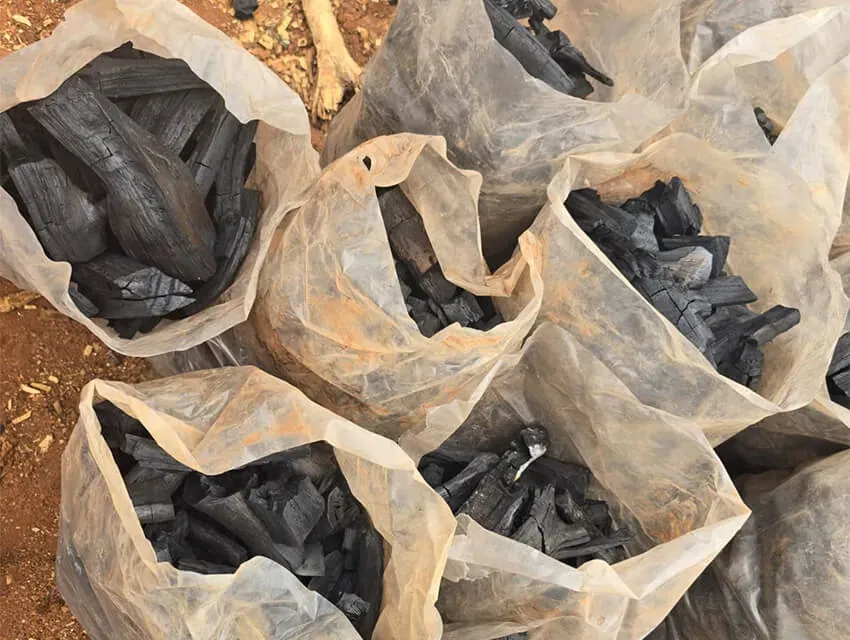
This paper by Avo Vision research team explores the types of trees in South Africa that are ideal for charcoal production. It provides a detail of the key characteristics of these trees and examines the specific regions where they are found in the country.
Hardwoods (Preferred for High-Quality Charcoal)
These trees produce dense, long-burning charcoal suitable for domestic and industrial use:
- Mopane (Colophospermum mopane)
- Regions: Limpopo, northern KwaZulu-Natal, and parts of Mpumalanga.
- Characteristics: Dense wood, high calorific value, and minimal smoke.
- Use: Excellent for braai charcoal and export markets. - Leadwood (Combretum imberbe)
- Regions: Lowveld areas such as Kruger National Park buffer zones and parts of Limpopo.
- Characteristics: Very dense, long-burning; ideal for premium charcoal.
- Consideration: Requires permits for harvesting due to its protected status. - Sekelbos (Dichrostachys cinerea)
Regions: Bushveld areas, particularly in Limpopo and the North West.
Characteristics: Burns cleanly, producing high heat.
Use: Popular for braai charcoal.
Invasive Species (Sustainable and Cost-Effective)
Harvesting invasive species contributes to ecological restoration while providing good-quality charcoal.
- Black Wattle (Acacia mearnsii)
Regions: Eastern Cape, KwaZulu-Natal, Mpumalanga, and parts of Gauteng.
Characteristics: Moderate density, sustainable when harvested from plantations.
Use: Suitable for both braai and industrial charcoal. - Rooikrans (Acacia cyclops)
Regions: Coastal areas, particularly the Western Cape.
Characteristics: Produces high-quality charcoal with a medium burn time.
Use: Preferred for domestic and export applications. - Eucalyptus (Various species)
Regions: Nationwide, especially in managed plantations in Mpumalanga and the Western Cape.
Characteristics: Fast-growing; less dense but adequate for general-purpose charcoal.
Use: Suitable for medium-quality charcoal production.
Burning Techniques for Charcoal Production
Steps for Burning
- Wood Preparation
Cut wood into pieces of uniform size to ensure even burning.
Air-dry for 3–6 months to reduce moisture content (ideal: <20%)¹. - Kiln Selection
Earth Kilns: Traditional, cost-effective for small-scale production.
Brick or Metal Kilns: Better for consistent quality and reduced smoke emissions².
Retort Kilns: Ideal for large-scale, eco-friendly production with high yield³. - Burning Process
Stacking: Arrange wood to allow airflow but prevent flames from consuming the wood.
Ignition: Start burning from one end to allow controlled pyrolysis.
Carbonization: Monitor temperature (350–500°C) for optimal conversion.
Sealing: Seal the kiln once burning is complete to prevent charcoal combustion⁴. - Cooling and Harvesting
Allow the kiln to cool for 2–3 days before extracting charcoal to prevent reignition⁵.
Optimal Regions for Charcoal Production by Tree Species
Limpopo and Mpumalanga: Mopane, Leadwood, Black Wattle.
KwaZulu-Natal: Black Wattle, Eucalyptus.
Western Cape: Rooikrans, Eucalyptus.
Eastern Cape: Black Wattle, Eucalyptus.
North West and Bushveld Regions: Sekelbos, Mopane.
References
Pienaar, A. (2022). Sustainable Charcoal Production in South Africa. Forestry SA: Pretoria.
Johnson, L. & Pretorius, M. (2020). "Improving Charcoal Efficiency with Modern Kilns". African Journal of Environmental Management, 12(3), pp. 45-56.
Ndima, G. (2019). Invasive Species and Charcoal Opportunities in South Africa. Department of Forestry and Fisheries: Cape Town.
Chikoko, T. (2021). "Pyrolysis and Carbonization Techniques for Charcoal". Southern African Energy Review, 15(2), pp. 89-102.
Mthethwa, K. (2018). Best Practices for Small-Scale Charcoal Producers. Rural Development Press: Johannesburg.



I am based in sekhukhune and I have a market for distributing charcoal and briquettes.How do I establish a charcoal producing plant